(352) 732-7777

Ocala, Florida
No Climb Horse Fencing
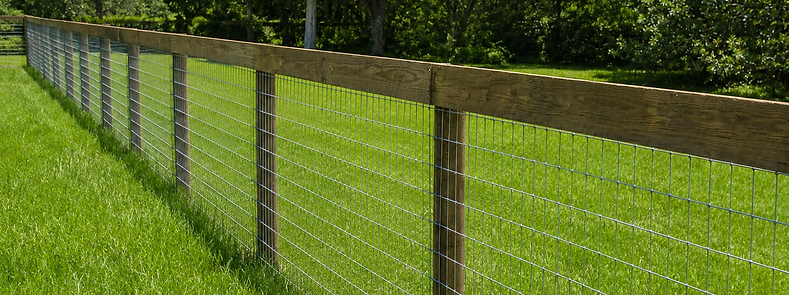
No-Climb Horse Fence Installation in Ocala & Central Florida
For Florida horse owners who want a safe, proven fencing solution without stretching the budget, no-climb horse fence is hard to beat. It's the most economical of the woven wire options, it installs efficiently across large acreage, and it does exactly what the name promises — keeps horses safely contained and predators firmly on the outside.
How No-Climb Works
No-climb horse fence uses a rectangular 2x4-inch grid pattern with a flat, smooth "square deal" woven knot on both sides. That smooth finish matters more than people realize — it means no sharp edges, no wire ends that snag and cut, and no abrasions when a horse moves along the fence line. The tight grid spacing makes it nearly impossible for a hoof or leg to push through, which eliminates one of the most common causes of serious fence injuries on horse properties.
Like V-mesh, no-climb wire is high-tensile woven construction, which means it absorbs impact without buckling or splintering. When a horse leans, pushes, or makes contact with the fence, the wire gives slightly and springs back — protecting both the horse and the fence itself.
How It Compares to V-Mesh and Diamond Fencing
All three woven wire options — no-climb, V-mesh, and diamond fencing — offer meaningful safety advantages over traditional field fence or barbed wire. The differences come down to construction, performance, and price point.
No-climb uses a rectangular grid pattern and is the most straightforward of the three to install and repair, making it the most cost-effective option for property owners fencing large acreage. V-mesh uses a diagonal "V" weave that adds an extra layer of climb resistance and makes it harder for horses to rest their chest weight on the top of the fence — a meaningful advantage for pushy horses or young stock, though it comes at a higher price. Diamond fencing is the premium tier, with a continuously twisted wire pattern that offers exceptional flexibility and impact strength, but at a cost that reflects it.
For most North Florida horse properties, no-climb hits the right balance — genuine safety performance at a price that makes sense for the acreage involved.
Why It Works in Florida
Marion County's sandy soil, summer rain, and year-round humidity create
specific demands for any fencing system. At Penrod Lumber & Fence, we install no-climb on CCA pressure-treated posts set to the depth Florida's soil conditions require, with consistent tension maintained across the entire fence line. Tension matters — a slack no-climb fence loses its safety
advantages quickly, and getting it right from the start is what separates a fence that lasts from one that needs constant attention.
We also recommend pairing no-climb with a top board or rail on most installations. It increases visibility for horses moving along the fence line, discourages leaning and reaching over the top, and gives the fence a finished, polished look that works just as well on a private farm as it does on a larger agricultural operation.
No-Climb Fence Works Well For:
-
Large pasture and perimeter fencing where cost per foot matters
-
Foaling paddocks and young horse turnout areas
-
Mixed livestock properties with horses, goats, or other animals
-
Properties where predator pressure from coyotes or dogs is a concern
-
Back pastures paired with 4-rail board fence on high-visibility frontage areas
-
Get a Free Estimate
If you're trying to figure out whether no-climb, or a combination approach makes the most sense for your property, we're happy to walk the land with you and give you a straight answer.
Call (352) 732-7777 or request a free on-site estimate today.